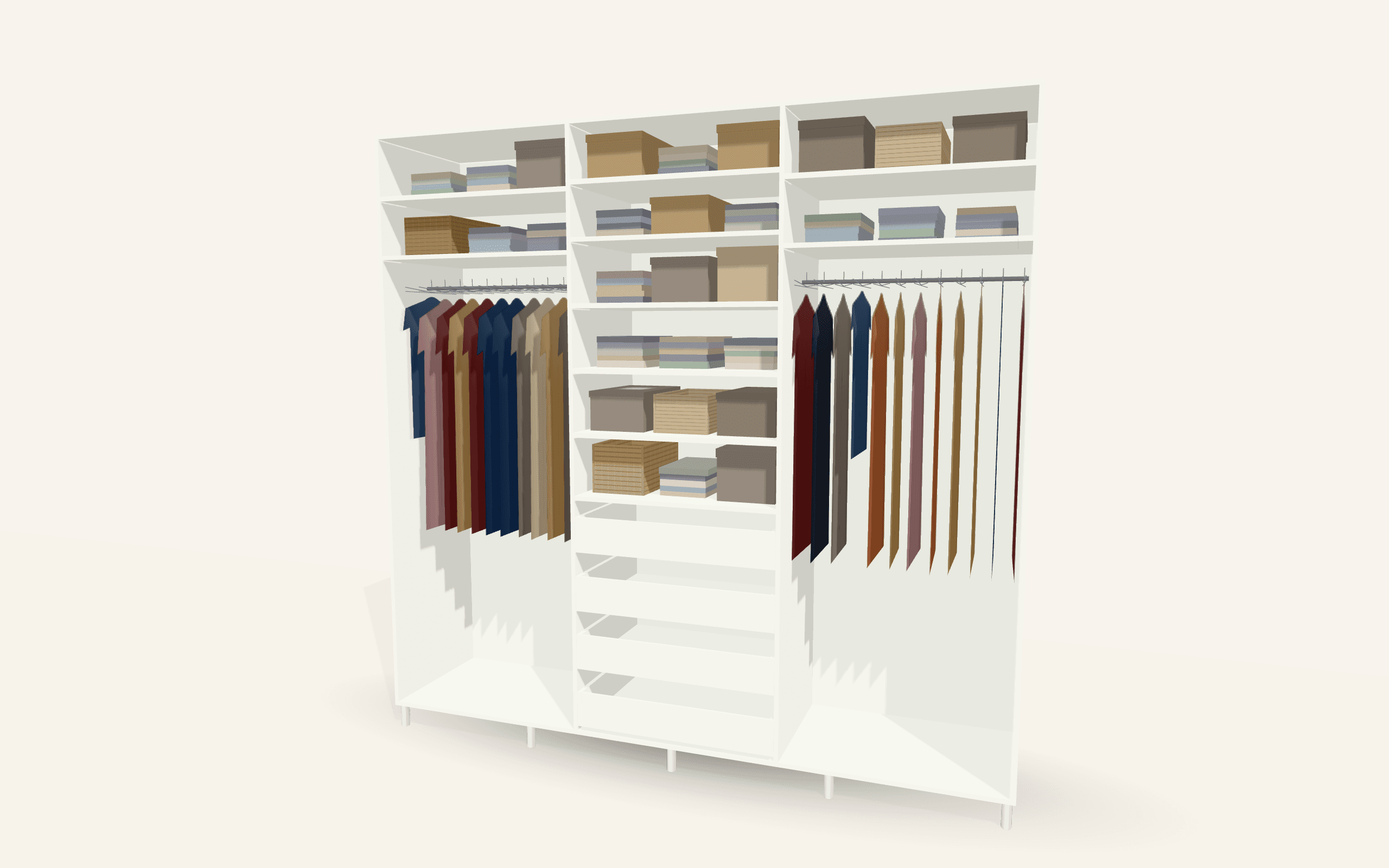
Wardrobe interior fittings: what to fit and where
Shelves, drawers, pull-out baskets, trouser rails, LED strips, mirrors and tie racks — what genuinely earns its place, at what height, and what it costs.
Guests see the outside of a wardrobe; you use the inside, every day. This page sets out what we can fit, what height each thing works at, and where the line runs between comfort and wasted space.
Everything below can be placed yourself in the configurator and checked in the 3D view.
Shelves
The cheapest and most versatile part of a wardrobe. A shelf takes folded clothes, boxes, bedding and bags.
Worth knowing: the span sets the thickness. Over a wide bay a shelf eventually sags, so above roughly 90 cm we support it or use a thicker board. If books or tools are going on the shelves, say so beforehand and we size them differently.
A shelf can also be glass, which is common in display sections and above a vanity.
Hanging rail
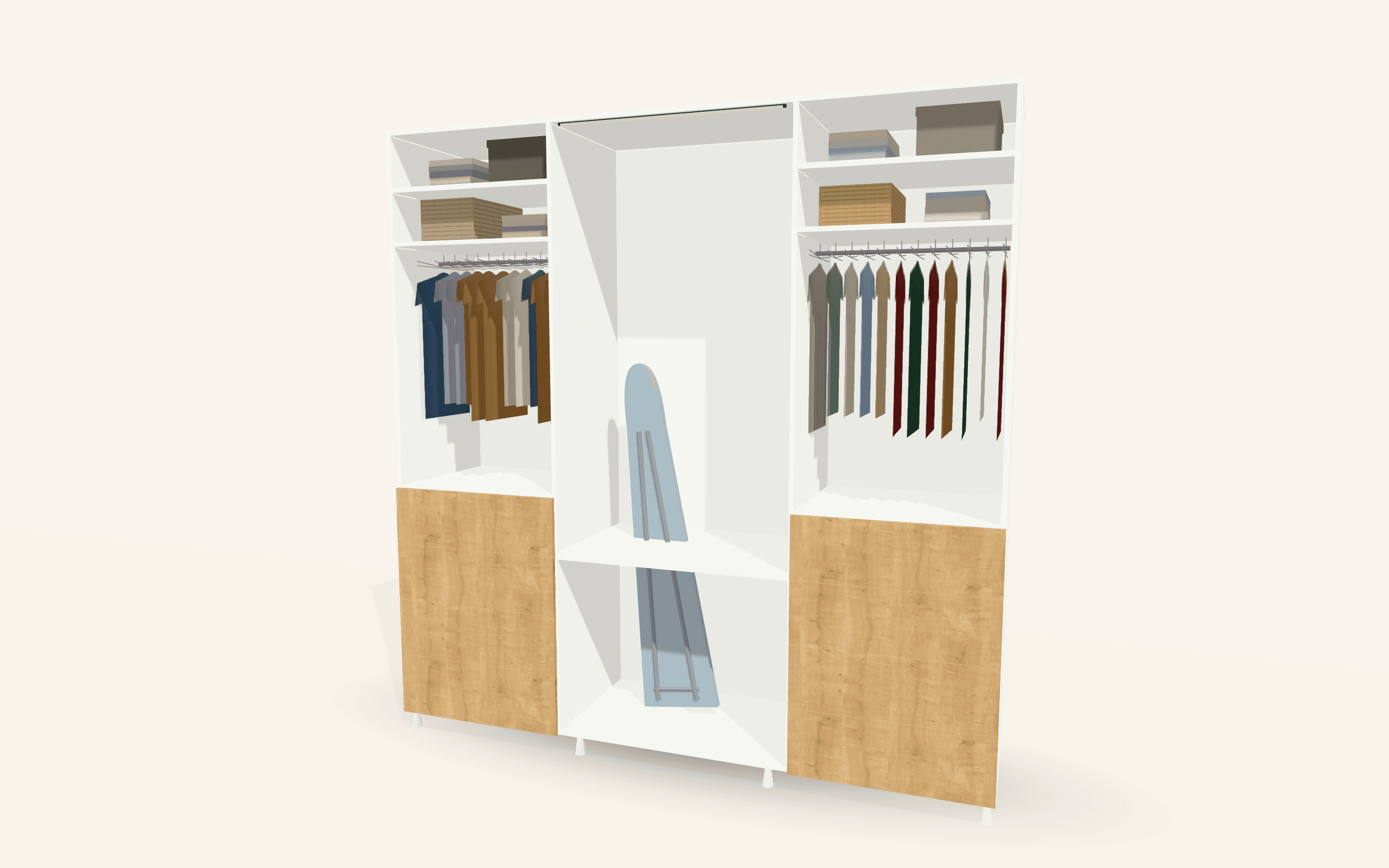
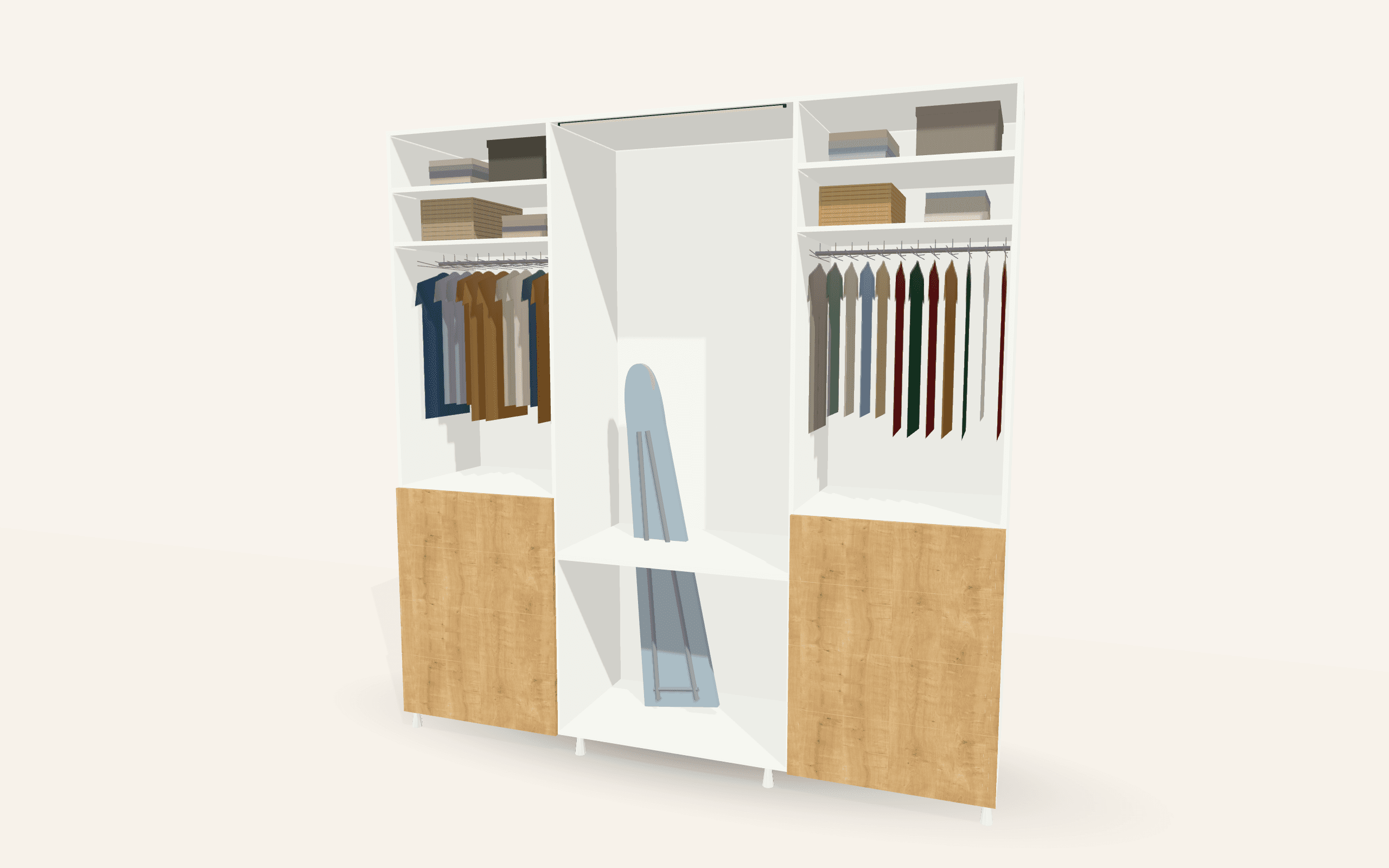
Needs at least 940 mm of clear internal height for short hanging, and considerably more for coats and long dresses. Internal depth should be at least 550 mm, otherwise clothes touch the doors.
Two rails one above the other double the capacity in the same height — worth doing anywhere only short items hang.
Drawers
A drawer is the most expensive part of an interior per litre of space, and the most comfortable. Each one is a small cabinet: a bottom, two sides, a back and a front, on a pair of runners.
Where to put them:
- up to about 1300 mm — above that you cannot see into an open drawer;
- in the lower part of the wardrobe, where they are easiest to reach;
- not behind a door that has to be opened fully first, wherever that can be avoided.
A drawer can have a front (a visible panel) or be frontless where it sits behind a door — which saves a panel and a handle, and on a bank of five that is not nothing.
The drawer box itself can be timber or metal. A metal system (Blum LEGRABOX, for instance) has thinner sides and therefore more internal volume; a timber box is cheaper and can be made in the same decor as the wardrobe. What we fit and why is in Why Blum.
Pull-out baskets
A mesh or solid basket on runners. Better than a drawer for laundry (it breathes) and for things found by feel. In low parts of a wardrobe — under a slope, for instance — often better than a shelf, because the contents come out to you.
Pull-out trouser rail
Horizontal bars on an extension. Saves a great deal of space compared with folding, and trousers do not crease at the fold. Needs roughly the same depth as a hanging rail.
Tie and belt rack
A small pull-out rack against a side panel. It costs a few centimetres and rescues a drawer that would otherwise hold everything in a tangle.
LED lighting
Strips are fitted under shelves, above hanging, or along the top of the wardrobe.
- Neutral white light (around 4000 K) shows clothes colours best.
- Aim the strip downwards and hide it behind the shelf edge.
- A door switch (the light comes on as the door opens) is a comfort on wardrobes opened in the dark.
Mirror
A mirror can go on the outside of a door, on the inside face of a leaf, or as a panel in a sliding door. An internal mirror is often best: it leaves no large reflective surface in the room, yet it is there exactly when the wardrobe is open.
TV bay, worktop and open niches
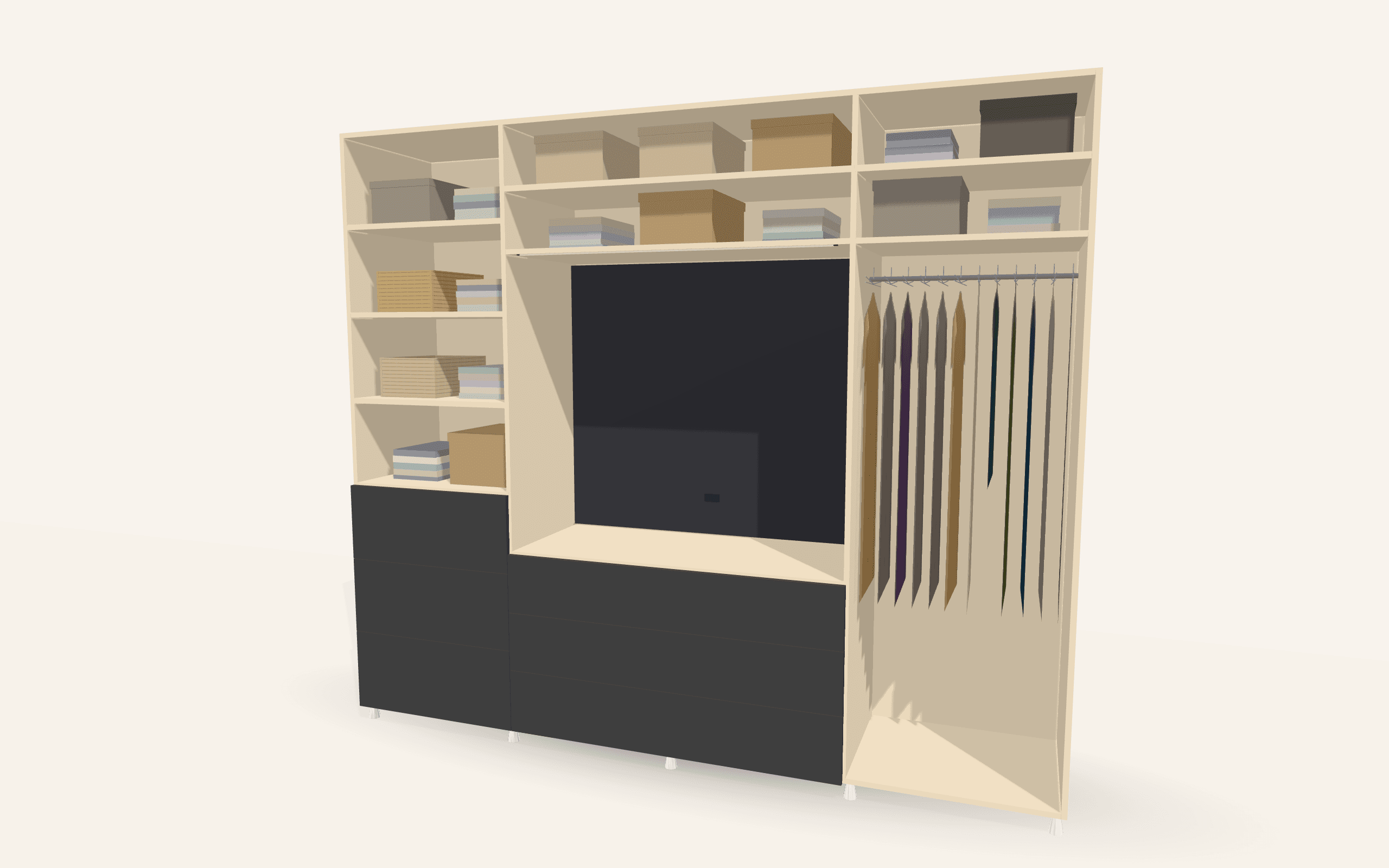
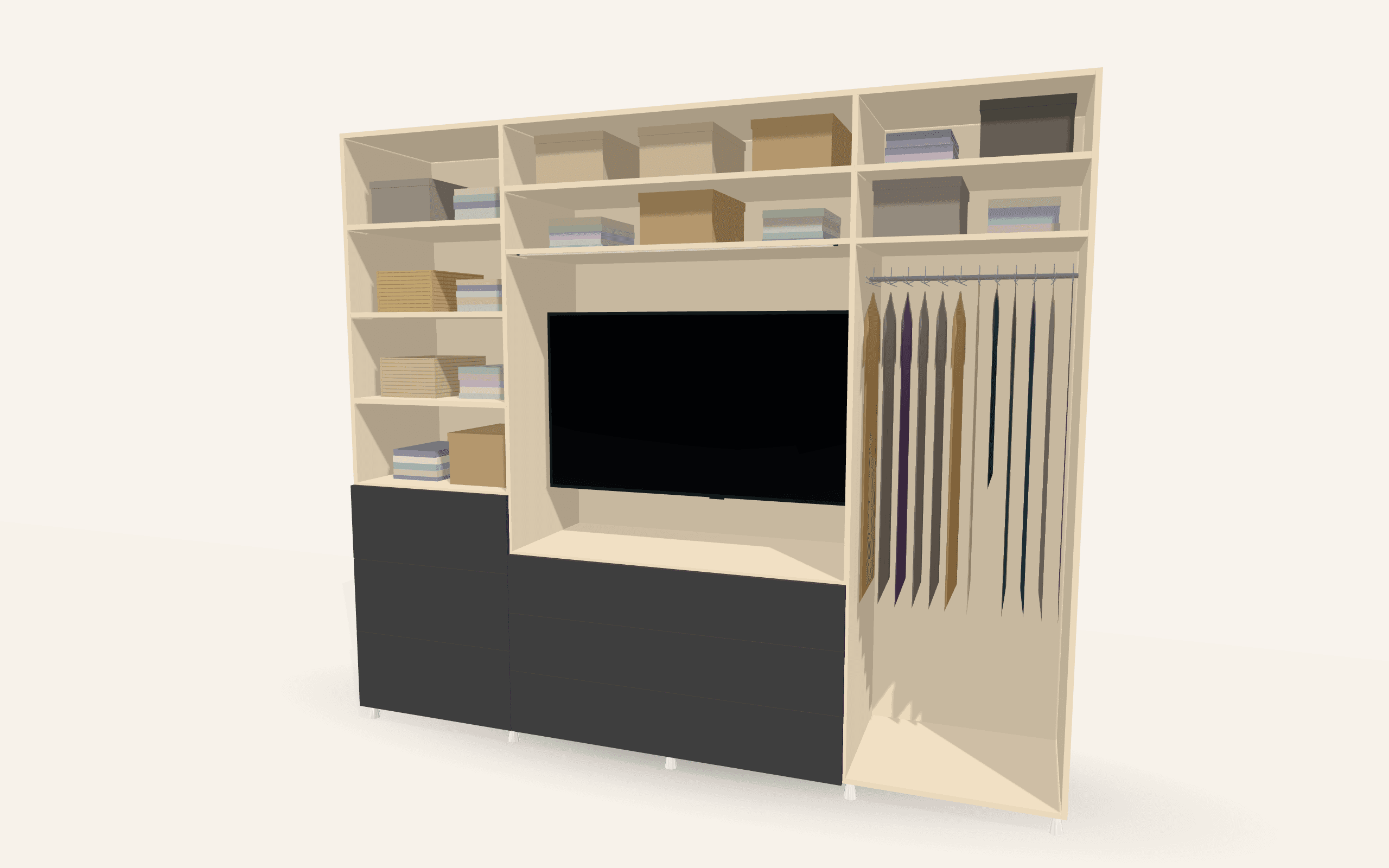
A wardrobe can be living-room furniture too. The configurator knows a TV niche, a worktop (for a vanity or a writing surface) and open niches. See the Gorenjska Media Wardrobe.
Safes
If you already own a safe, you can position it in the configurator to check that it fits and that the doors still open around it. We do not sell or install safes — it is in the model so the space can be checked in advance.
What we usually recommend
For an ordinary bedroom wardrobe for two:
- a long shelf across the full width at the top for seasonal things;
- two thirds of the width hanging (partly doubled);
- one third shelves for folded clothes;
- a bank of three or four drawers low down, frontless if they sit behind doors;
- an LED strip above the hanging;
- a mirror on the inside of one leaf.
Next step
Open the configurator and arrange the inside around your own habits. If you want to know how that affects the price, read What a fitted wardrobe costs.
Frequently asked
- Up to what height are drawers worth fitting?
- About 1300 mm. Above that you cannot see into an open drawer or reach the back of it, so a shelf or a pull-out basket is the better answer.
- How much height does hanging need?
- At least 940 mm of clear internal height for short hanging (shirts, jackets). Coats and long dresses need considerably more, which is why long hanging usually gets a column of its own.
- Why are frontless drawers cheaper?
- Because the visible front panel and the handle are not needed. Behind a door the front is not seen anyway — on a bank of five the saving is noticeable.
- Do you sell safes?
- No. In the configurator you can position a safe you already own to check that it fits and that the doors still open around it.
- What LED lighting works best?
- Neutral white at around 4000 K, in strips under shelves and above hanging, aimed downwards and hidden behind the shelf edge. A door switch is a comfort on wardrobes opened in the dark.