What a fitted wardrobe costs, and what moves the price
The six things that actually set the price of a fitted wardrobe: size, door type, interior fittings, decor, painted fronts and installation — plus where the starting prices are.
There is no single answer to "what does a fitted wardrobe cost", because a fitted wardrobe is not one product. Two wardrobes of the same width can differ in price by half, and the difference is always in the same six things. They are set out below, heaviest first.
Concrete starting prices for real builds sit with our designs — each one carries a "from" price. The indicative price of your own design updates as you work in the configurator.
1. Size: how much board goes into it
The base material is melamine-faced chipboard, which we buy in 2800 × 2070 mm sheets. The price rises with the square metres cut, but not smoothly: a sheet is bought whole even when three quarters of it are used. A wardrobe that just fits on one sheet is therefore proportionally cheaper than one needing a fraction more.
Height matters for the same reason. A wardrobe up to the ceiling uses more material than a lower one — while removing the need for a separate top box above it.
2. Door type
Doors are often the single most expensive part of a wardrobe.
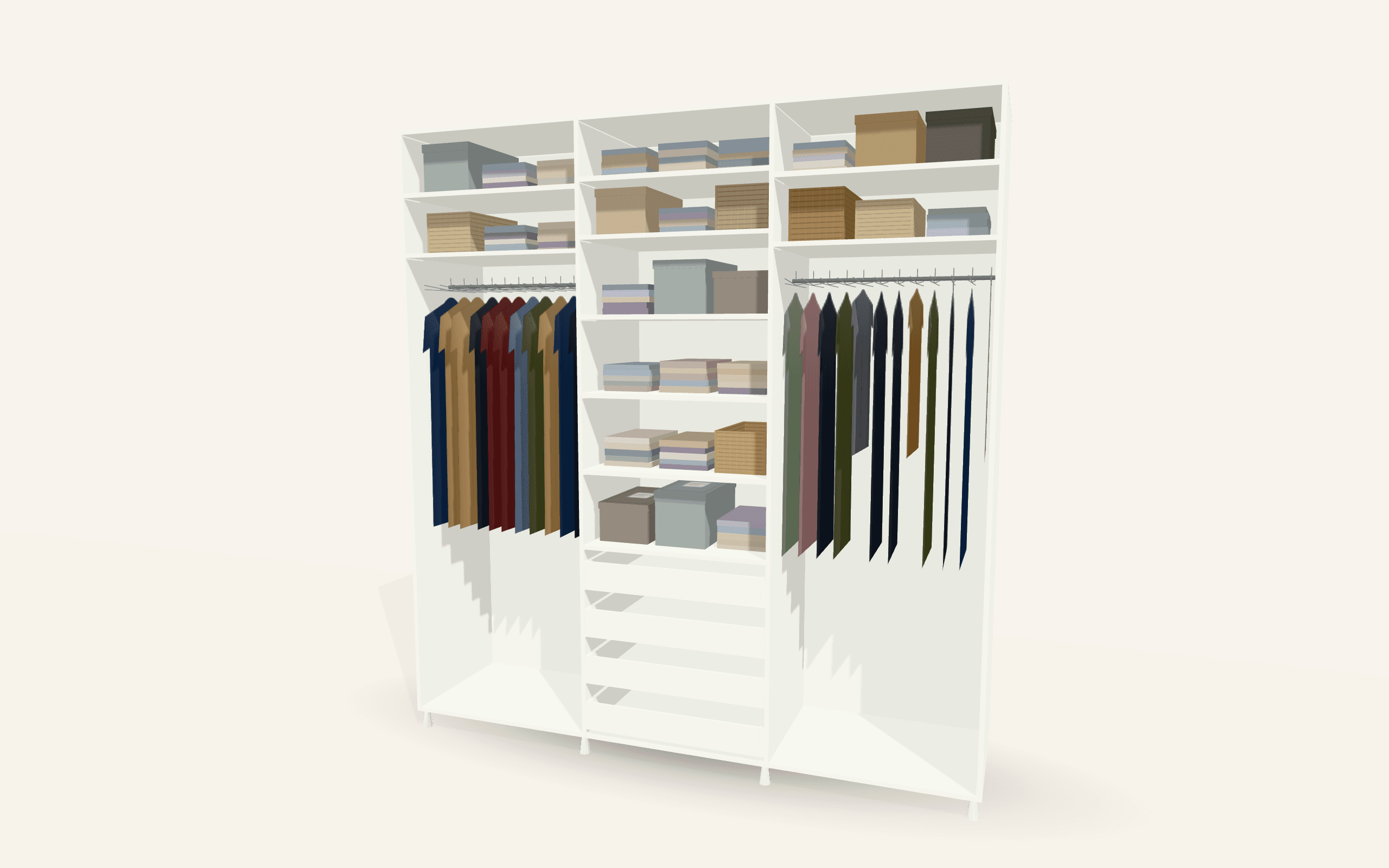
- No doors (an open dressing unit) is the cheapest build: no leaves, no hinges, no door hardware.
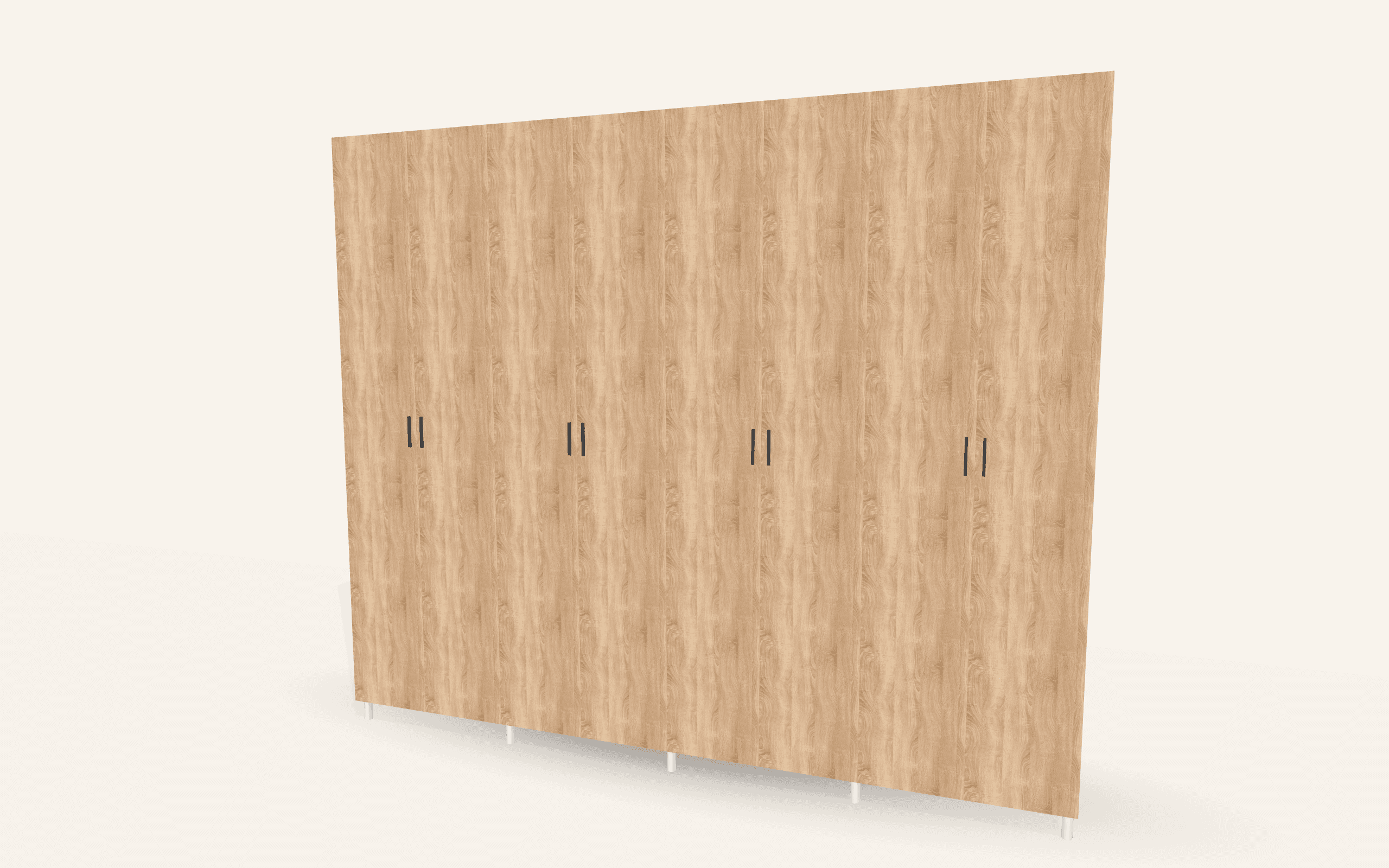
- Hinged doors sit in the middle. Every leaf needs its own hinges and handle, and wide openings are split into several leaves, because the widest sensible single leaf is 600 mm.
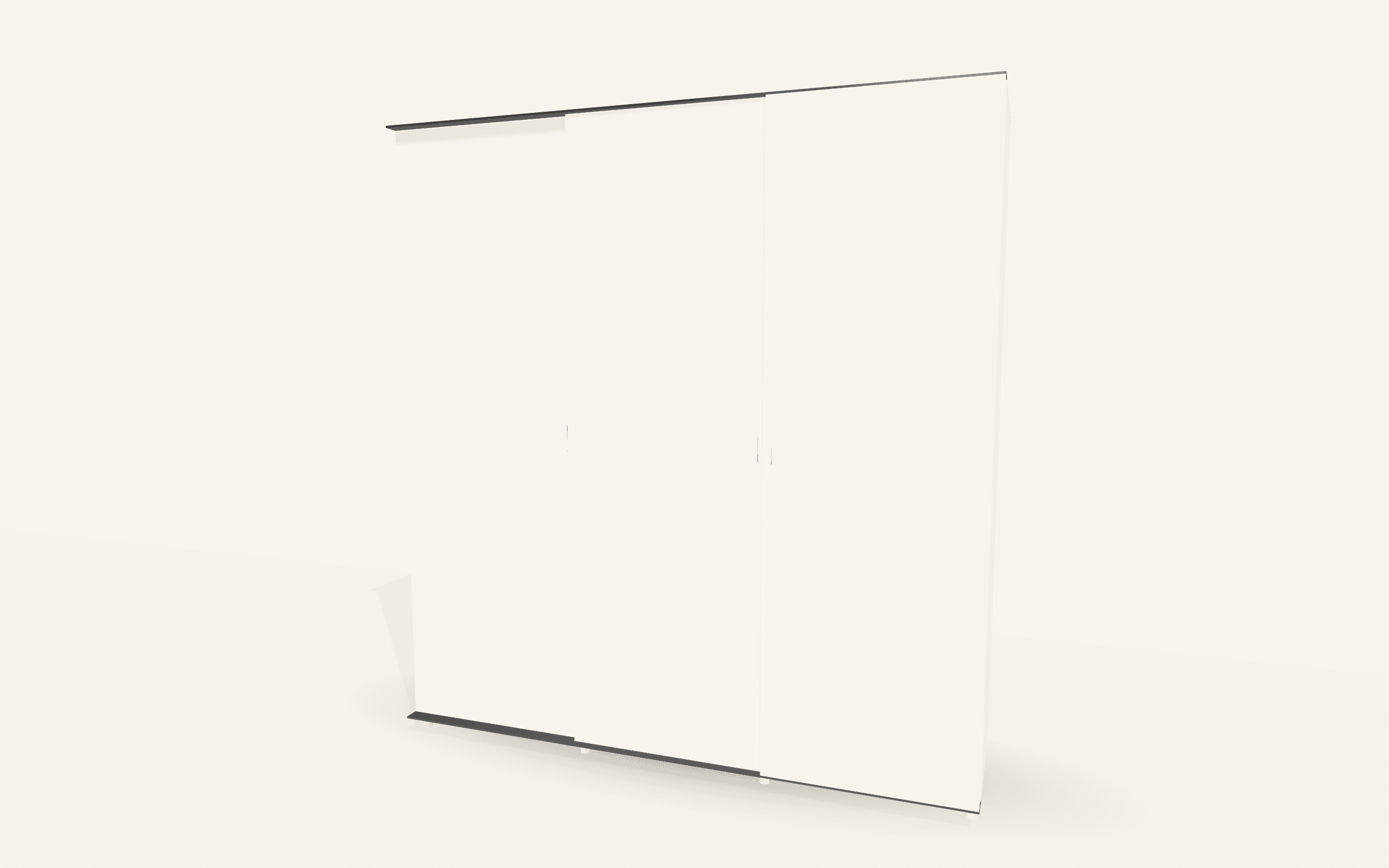
- Sliding doors are usually the dearest, because they are a system: top and bottom tracks, frames and runners. They are also the only answer when there is no room to swing a door open.
The difference is set out in Sliding or hinged doors.
3. Interior fittings
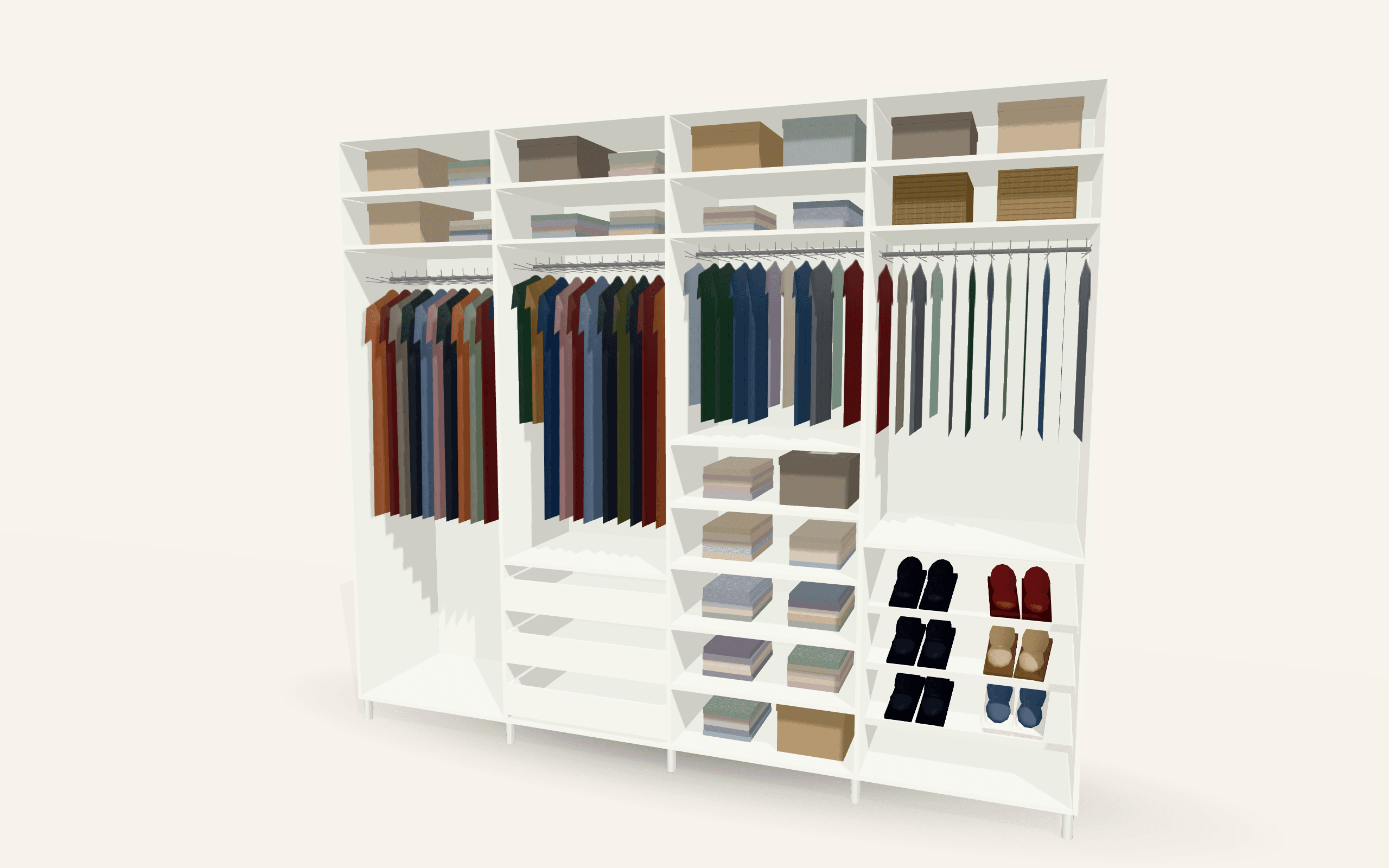
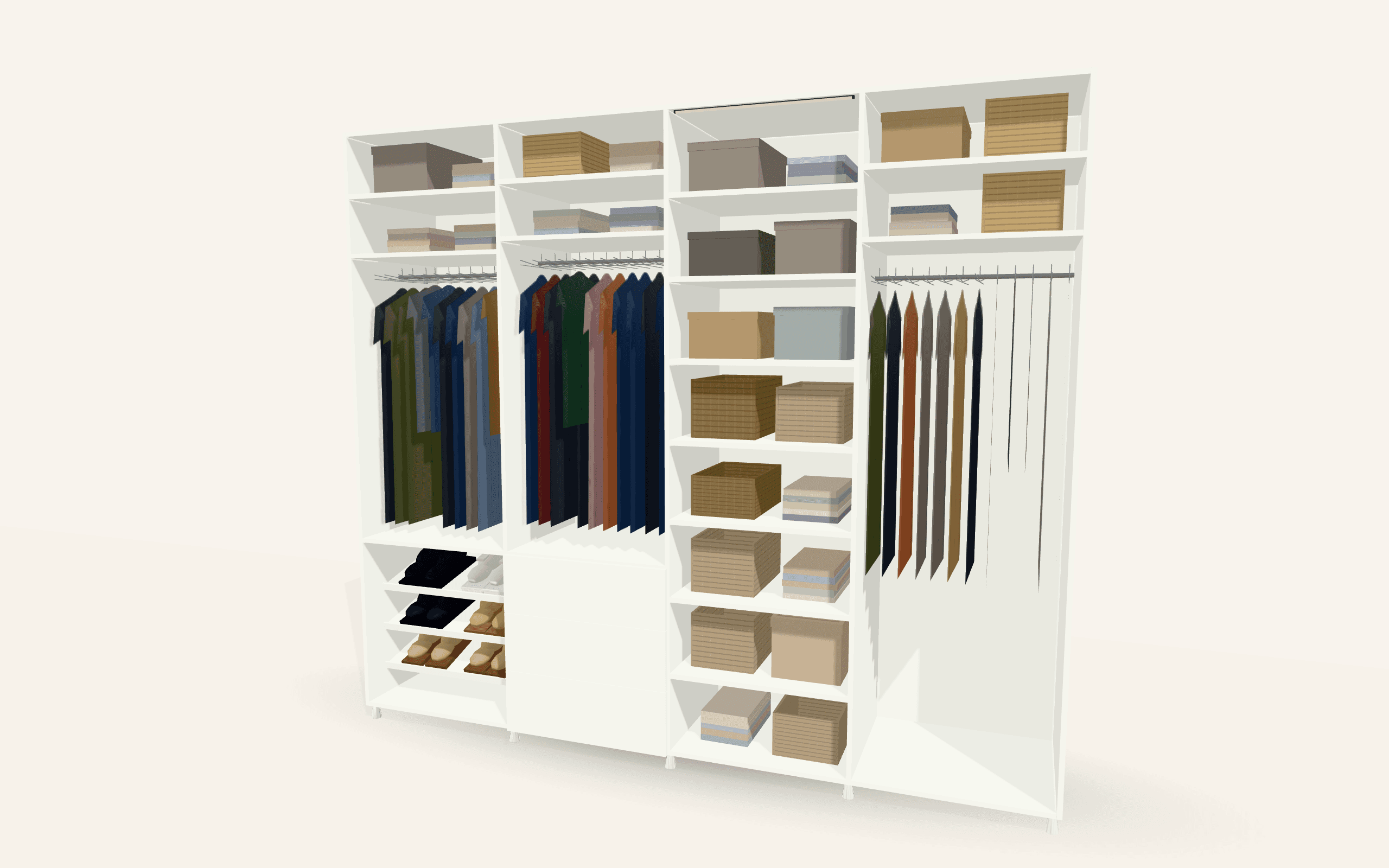
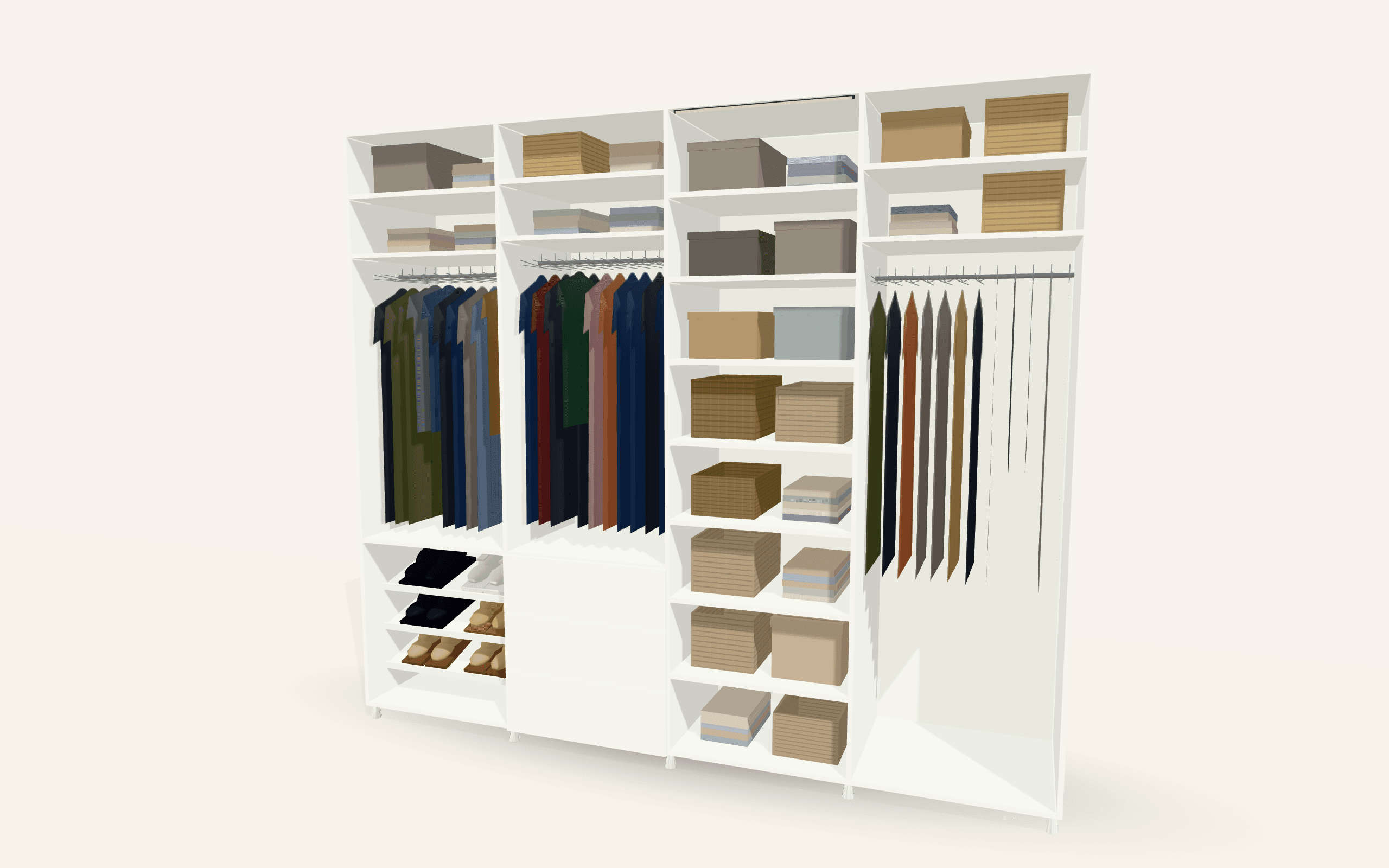
An empty carcass with shelves is cheap. Every drawer is a small cabinet in its own right — a bottom, two sides, a back, a front and a pair of runners — so a bank of five drawers costs noticeably more than a shelf in the same place.
The same goes for pull-out baskets, a pull-out trouser rack, LED lighting and mirrors. None of it is expensive on its own; together it is often the third of the price customers do not expect. What is available is described in Wardrobe interior fittings.
4. The board decor
White and plain colours are the cheapest. Woodgrains with a pronounced texture cost more, marble and specialty decors a little more again. The difference per square metre is small, but it is multiplied by the whole wardrobe.
One thing worth knowing: changing decor costs nothing in labour, because the build is identical. You pay only the difference in the material. If something appeals to you, swap it in the configurator and look at the difference.
5. Painted (sprayed) fronts
A painted front is not a board in another colour; it is a separately made part — an MDF substrate that is sanded, primed, sprayed and dried. Painted fronts therefore cost substantially more than melamine ones — not because of the paint, but because of the hours and the time in the spray booth.
Note also that a second colour on the same wardrobe costs a little more than the first, not double: it is one extra colour changeover in the booth, not a second job. There is more in Materials.
6. Installation and delivery
Installation is done by our own fitters; the quote shows it as a separate line or inside the wardrobe price, depending on the build. Distance and difficulty both count — a wardrobe under a slope, or in a room with out-of-square walls, needs far more adjustment on site than a straight alcove.
Where you can save without regretting it later
- A cheaper interior decor. Nobody sees the inside when the doors are shut. A white interior behind timber fronts is a common and sound choice.
- Fewer drawers, more shelves. A drawer is comfort; a shelf is space. Keep drawers where you genuinely need them — up to roughly 130 cm, because above that you cannot see into one.
- An open bay instead of doors. One open section for bags or bedding lowers the price and is often more useful.
What we would not economise on is hardware. A hinge and a runner are the only parts of a wardrobe that move every day, and the difference between average and good hardware shows in the second year. Why we fit Blum is in Why Blum.
Next step
Design your wardrobe and watch the indicative price as you go, or start from the design closest to your idea.
Frequently asked
- Can you give me a price over the phone?
- Roughly, yes; precisely, not without measurements and a specification. The fastest route to a realistic figure is to build the wardrobe in the configurator — the price updates as you work and changing your mind costs nothing.
- Why is a sliding wardrobe dearer than a hinged one?
- Because sliding doors are a system rather than a leaf: a top and bottom track, a frame around each panel, and runners. Hinged doors need only hinges and a handle. Sliding doors, though, need no clearance in front of the wardrobe, which is often decisive in a narrow room.
- How much more do painted fronts cost than melamine?
- It depends on the area, but the difference is always noticeable. A painted front is not a board in another colour; it is MDF that is sanded, primed and sprayed, so you are paying for labour and booth time as well as material.
- Does the configurator price include VAT?
- The displayed price is indicative and includes VAT. Only the written quote issued after the survey is binding, and it shows the price broken down.
- Does the price change if I switch decor?
- Only by the difference in material cost — the labour is the same across melamine decors. You can try the swap in the configurator and see the difference immediately.